Showing posts with label America. Show all posts

Wednesday, 7 November 2012

Mitt Romney: Why the Republicans lost and may continue to lose

The fanfare is officially over. After hundreds of thousands of phone calls, tens of millions of tweets and billions of dollars spent on campaigning. America decided to stick with President Barack Obama.
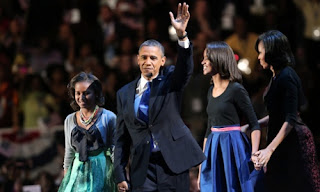
In the hours after his victory speech, many both domestically and internationally are making huge sighs of relief to see the 44th President re-elected, despite a clear victory in the all-important Electoral College.

Yet, for a long time, many Democrats feared the worse. Many influential commentators believed that Obama was on the verge of becoming the first Democratic President to serve one-term since Jimmy Carter. Perhaps he should’ve been.


Obama has already highlighted his desire to finish what he originally set out to do. It is true this is made easier by the fact that he no longer needs to be concerned about his re-election prospects and can ‘get on’ with the so-called job. However, for many ordinary Americans, the idea of getting the job done may appear vacuous and non-evident. For all the rhetoric Obama promised in 2008, much of his ideals and promises lie dormant. The audacity of hope became the absence of anything.

The economic legacy inherited by the Obama administration was far from healthy. Increasing unemployment, a chaotic financial system as well as dealing with two long-term wars and an ever increasing public debt. For any President arriving into White House, any sort of political legacy would need to be put to one-side whilst dealing with the bigger issues. Yet Obama chose to deal with healthcare.

There are arguments to be had about healthcare in general in America. Whether you agreed with George W. Bush extending Medicare or the universal cover provided by Obamacare. But why was this his focus? Why did Obama fail to create the jobs he said he would create? Why was the stimulus seen as the only answer to solving America’s crisis?

Some complain that the Republican majority in the House of Representatives made things impossible, but other Presidents had managed to deal with this before (Clinton springs to mind).

No incumbent President had ever gone into the polls with such poor unemployment figures and approval ratings. So the question is how did the Republicans lose it?

The wrong message
There’s no doubt that Mitt Romney was the best out of a bad bunch, but it shouldn’t deflect from the point that he is a more than competent candidate to become President. A successful businessman, family man, and politician with an excellent record as Governor, Romney was a capable of winning.

Yet, perhaps the Republicans forget the most important thing about politics. Elections are about winning. For too long the candidates slung mud and created an unhealthy portrait of each other. Commentators point at the fact that this allowed Obama to spend his campaign money during the election, but money fundraising wasn’t an issue during the election for either side.

The problem was that we saw the Republicans for what they really were and it was a right-wing party that did not reflect the rest of the electorate. Politics is tribal, but surrendering the centre-ground can be ill-afforded in any election. The GOP may have targeted the blue collar and the religious vote, but its policy towards immigration, the economy and women saw it ostracise a huge proportion and increasingly important section of the electorate: Hispanics and women. Suicidal when one looks at the make-up of the swing states.

For now, the debate will quickly move on as Obama tries to deal with the impending issue of America’s fiscal cliff but the question for the Republicans really remains where do they go next? Was Romney a failure because he wasn’t conservative enough or was it that the party is too right-wing?

2016 will see two new candidates from each side fight again. Even if the Republicans decide to lead with a woman (not Palin) or even a Hispanic, what’s more important is that they sort out their politics, otherwise they won’t be elected any time soon.

Thursday, 8 March 2012

The EU: Ode to joy or not?

The internal strife emanating throughout Europe is transforming the union into a concord of disharmony. In streets and city squares, hoards of protesters commune to aim their vitriol at lacklustre governments and impugned banks. The years of cheap credit and profligacy have returned to haunt many nations as their debt-ridden treasuries have been forced to implement austerity measures in return for financial bailouts. In Madrid, protesters known as los indignados (meaning ‘the outraged’) have occupied the Puerta del Sol, rejecting the punishing measures accepted by its government. Meanwhile in Athens, Syntagma Square has seen months of violent clashes between riot police and demonstrators, as the Greek government implemented tough austerity measures in return for EU loans. Dublin, Lisbon, London and Rome have also seen a surge in protests and occupy movements, all in reaction to the prospect of cuts to welfare and an unreformed financial sector. What is most noticeable about the swelling in anger is the increasing distrust and hostility between nations. Germany, the central political and economic power is increasingly being slurred with Nazi characterisations, as it forces the ‘feckless’ Greeks to accept the tranches of bailout money. The open antagonism between the prudent Northern Europeans and their reckless Southern cousins is opening tensions to the sustainability of the whole fiscal and political union.

Yet as the continuous infighting continues, many of Europe’s other countries are beginning to lose sight of the European dream. Welcomed in from beyond the frosty realms of the Iron Curtain, Eastern Europe is discovering that the party they thought that was inviting is not as welcoming as they previously thought.
Many policy chiefs in the corridors of power of Brussels believed that a larger political union would create a stronger economic union. To an extent they were correct; here was the world’s largest and most successful internal market. All countries from the Eastern bloc yearned to join; even some North African countries sought membership. The European Union had the benefits of close political and defensive ties with America, multilateralism and a form of welfare capitalism. How the tides of fortune have ebbed away.

Countries that EU technocrats may have one day expected to join are weighing up their options. Georgia, Ukraine and Kazakhstan resent Europe’s hesitancy and hypocrisy. In fact, the West’s biggest proponent in the former Soviet bloc, President Saakashvili of Georgia, could flout the constitutional rules and run again for Presidency in 2013. Why should any of these countries listen to hedonistic messages of prudence when the European Central Bank is printing money to buy debt from its own shambolic economies? Even Hungary, an EU member, is flouting union rules over budget-deficit targets and media freedom. Turkey appeared to go cold over Europe many years ago. Russia is happy to see former satellite states return to the fold.


What about that great American hope? The US was once the Baltic States biggest and most loyal admirer. Countries like Poland were steadfast in their support of NATO and happy to commit men on the ground in war zones. Not to mention America’s new missile defence shield, to the chagrin of Russia. Yet, American foreign policy is heading west once again. The geopolitical and economic shift to Asia is seeing American strategy head towards the Pacific and the emerging markets. No longer is Europe the primary frontier. Obama’s decision to abandon the shield and along with the EU’s inexistent foreign policy is turning the once idealistic Poles and Czechs into hardnosed endorsers of Realpolitik.

The EU’s decision to prevent the Euro from failing will see a new era of internal relations. Closer fiscal relationships will only mean tougher stances on imprudence. The collective voices of the right in Northern Europe will no longer tolerate the spending cultures of countries like Italy and Greece. EU expansion will certainly be welcoming to countries of the Balkans but it might not be as jovial as they thought.

Wednesday, 1 February 2012

Mitt Romney: A rock and a hard place.

Mitt Romney is now confidently sauntering towards the Republican Presidential nomination as he comfortably beat his nearest and fiercest opponent Newt Gingrich in the Florida primary. Gingrich, the former Speaker of the House, appeared last week to be making a serious challenge after winning the South Carolina primary. However, a series of setbacks including some effective negative advertising campaigns has seriously undermined his bid to challenge Barack Obama for the Presidency in November. The other candidates Rick Santorum and Ron Paul both failed to make double digits.

The results reflected the amount of money spent on campaigning. Both Santorum and Paul spent nothing in Florida taking fewer than 350,000 votes. According to CNN, Romney outspent Gingrich by 5-1 and crucially takes all 50 votes from the Florida delegates.

After his victory Romney reflected that he hoped to return to Tampa in August to be officially confirmed as Republican Presidential nominee. Perhaps most importantly, he added that he hoped that it will be a time for all Republicans to reunite behind him.


This is where the issue lies. At his State of the Union address, President Obama set out his agenda on how the election will be fought: fairness. He believes that the positioning of the Republican delegates places his party in a better position to speak to ordinary Americans.

We have already discovered that Romney pays 13.9% income tax on over $21 million whereas Gingrich received a $1.6 million advisory fee from the insolvent mortgage lender Freddie Mac. It is a tactic that may easily play into the hands of Mr Obama, who will also be glad to see a growing economy and lowering unemployment. A few months ago, Republicans were certain Obama would be a one-term president, now they're not so sure.

The ultimate problem for the party is that they still have an identity crisis. Similar to the Left in Britain, there is still an ongoing argument on where the party should be positioned. This was reflected in the votes, where four out of ten Florida voters thought Romney was not conservative enough (Washington Post). Much of the debates are dominated by issues regarding immigration and ‘European-style socialism’. Although no Tea Party backed candidate is running, their spirit is evident.

Yet it would be unwise to pander to such ideologies. Nearly 40 per cent of Americans declared themselves to be independent voters and many of the issues raised by Tea Party members do not function in the day-to-day lives of ordinary Americans. It could be a vote loser.

Romney will most likely win. His message is more consistent, he is better organised, he looks more like a leader; but it may not be enough to take him to the White House. If not, then what do the Republicans do?

Sunday, 11 September 2011

9/11 - America's nightmare

If history is a subject about remembering the names of dead kings and queens and memorising important dates, then September 11th, 9/11, is the most memorable of them all. On that, beautiful Tuesday morning in downtown Manhattan, where clear blue skies and naked sunshine shone upon the east coast metropolis, the events of that fateful day, that left the whole world aghast, turned the vivid blue sky to a choking, black fog. The television news replaying footage like an advertisement, looping pictures of horror and awe. Beneath, within the panic, saw the remnants of a European city, razed to the ground by Allied bombing; a grey haze and tampered soul. Yet this was not just a mass grave, this was the sowing of seeds for a nightmare that was about to unfold, one that would make us all victims. Ten years on, the drama appears to have quelled. The protagonists have been written out of the script. George W. Bush, then US President, is now retired and has already written his memoirs and Osama bin Laden, the poetic Saudi and Al-Qaeda leader, met his end this year in his compound in Pakistan. A decade later, as the world relives the tales of bravery and loss from loved ones and observers, we have a clearer picture of the world we now live in and what 9/11 experience taught us all and inevitably the history books.

America’s response and subsequent combat mission in Afghanistan was permitted by the UN and was backed by 41 different countries, who all provided troops to bring down the Taliban in Afghanistan. Nearly ten years after the Cold War had ended and involved in fewer armed conflicts, this was an opportunity for the world to see the firepower of the American military. Cruise missiles, stealth bombers and futuristic weapons all contributed to the downfall of the Taliban regime and the liberation of Kabul in late 2001. This was a victory for the men and women who had lost their lives in the towers, the Pentagon and the many who had tackled the would be suicide bombers in Pennsylvania. Yet, all the while Mr Bin Laden managed to cross the border and live safely in neighbouring Pakistan.

Perhaps the country that has suffered the most subsequently is Pakistan. None of the men that flew the planes into the towers were Pakistani nationals. Before 9/11 there had been only one suicide attack incident, since 9/11 there have been hundreds. The Pakistani state has become a lot weaker and many of the moderates have been succeeded by Islamists who despise the values of the West and America. Much of the aid given to the Pakistani state has been swallowed up by the military, leaving the education budget with a miserly 2%. Most military analysts say that the problem now lies in east of Afghanistan, in Pakistan. NATO troops will never be able to defeat the Taleban because its roots are tribal and local, just like the British Government could never defeat the IRA. The notion of state building in Afghanistan is impractical because the issues that need addressing are political. When NATO troops finally leave, will Afghani troops be capable of defending their country or will the militants from Pakistan be waiting in anticipation? The war planning was nonexistent and improvised as the battles ensued.

Not since Pearl Harbour had America been attacked so unexpectedly and spectacularly. As intelligence experts searched for answers, the stories of heroism and selflessness emerged from the dust. No one can deny America’s anger and certainly, its self-contemplation of what had just happened; the people who had died were casualties, just like other people who had died in bombings or hijackings over the years. Yet to die ‘at’ 9/11 made someone more exceptional than for someone to die ‘on’ September 11. The circumstances were horrific, but it blazed a trail of American exceptionalism that was ultimately toxic. They weren’t just killing and targeting Americans, they were killing and targeting America itself.

This led to the Bush Administration, acting with impunity in Iraq, without a second resolution from the UN Security Council because this was a war for freedom and democracy. The CIA conducted the rendition and torture of foreign nationals in Guantanamo Bay and other countries. It was a foreign policy based on a doctrine not the economics, so as Americans enjoyed further tax breaks and the extension of social security, the country’s foreign adventures were paid on its credit card (the Bank of China had the lowest interest repayments). It is inconceivable based on today’s sluggish American economy and deficit that it would even consider intervening in countries with despotic regimes such as Syria or Iran.

9/11 was a horrendous day for the people of New York but it now is a part of what it means to be a New Yorker. It was the first event that the globalised world witnessed and suffered. We all are subject to stricter security measures in airports and the rise of CCTV in our towns and cities. We were brought together by the loss but it did a great deal of harm to the global communities. Suspicion and contempt for innocent people has only made some situations worse. September 11th was a dark day and forever the empty chair will always remind families at holidays and celebrations. Yet we should not forget the other victims and the how it really changed the world forever.

Sunday, 23 January 2011

America: she will bounce back.

It is becoming self-evident that Americans believe themselves to be in decline. Many are now thinking that the next generation of Americans will be poorer than their parents. It appeared to be inevitable that America would be caught up economically by the population-heavy likes of China and India but is it possible that there is a decline in cultural identity and that Americans are losing their ability to understand what being American is all about.

After America’s defeat of Soviet Communism that led it to become the world’s only superpower, it appeared not to have even reached its apogee. Over the next few years the world looked to America’s vision and leadership over global events. As American backed democracy helped paint the world in new shades of hope and freedom, the US-led coalition defeated Saddam Hussein in the first Gulf War; the American dream was living, loudly and proudly. September the 11th changed all that, it made Americans question why people would want to attack them and their country. The War on Terror showed that it was incapable of fighting all wars by itself and the rhetoric of omnipotence was as apocryphal as the enemy itself.

We now know that the Soviet economic plan was flawed and struggling before the words Glasnost and Perestroika entered our political discourse. Perhaps the immediate struggle is the idea that China, using a similar economic model to the US, is now competing to overtake her in political, economic and military stakes. Even Napoleon said ‘When China wakes, she will shake the world.’ America cannot begin to compete at the same economic revolution that is propelling China forward. The ideological battle of the free West against the shackled East appears to be fragmenting in round two.

Many Americans hold proud the idea that to be American was to be winner in the lottery of life; though it is something President Obama holds with a deal of relativism. People forget that these words were being uttered a century before by an Englishman in a similar position.

An abandoned factory in Detroit, Michigan.
http://www.urbanghostsmedia.com/2010/06/rust-belt-road-trip-75-urban-decay-pics/
Many Americans hold dear that being American is not a nationality, it is an ideal. A place where no one is judged, the land of opportunity; something we see every day when watching an American film. Is this what America is struggling with? The idea that it may no longer be ‘great’ and that is being usurped by foreign powers. The more acerbic members of The Tea Party movement saw the founding fathers and constitution as divine and cannot concede to inferiority, particularly if it is God-given. The great industrial hearts of Pittsburgh, Detroit and Cleveland – the factories of the Midwest – are rusting into economic grapes of wrath. Even on television, the anachronistic films starring John Wayne or Bruce Willis – the American good guys – are being replaced with a different view of America – Mad Men during its rise to The Wire showing its fractured soul. Even America’s own portrait is distorting.

Yet despite America’s political upheaval in recent years it is still the place where people want to go and fulfil their lives. It is still generating ideas that are transforming the way we live our lives i.e. Facebook, Google and Apple. The world is becoming multilateral and American ideas are propelling it forward, despite the economic setbacks of recent years. America must remember the dark hours during the Civil War and Pearl Harbour, it did emerge stronger. America is changing: ethnically, culturally and evolving politically; it must meet the challenges economically. The world doesn’t get excited over Chinese state visits or Indian trade missions; they look to Presidential visits and the excitement of going to America. America cannot be cleansed of its soul in a decade, the world owes it too much and it will fight back.

Wednesday, 13 October 2010

The Cossacks: To Russia with love?

There is something warm about watching the reaction of soldiers returning from war. The lucid smiles and cries of happiness when families reunite after months of absence and separation. It is not cold turkey, besides the post, there is the internet to keep them updated with news from back home. It was not the same for the men of World War Two. The policy of enlistment meant that men could be called away for years and often leave was something of a dream, especially at the front. Those men interned in Prisoner of War (PoW) camps fared worse, despite the depictions of Hollywood, successful escapes rarely occurred and incarceration for some men lasted the whole duration of the war. The only lifeline was from mail back home to keep their morale high and mind occupied.

Towards the end of the war, when the future of the world was being decided, the Allies signed agreements that all liberated soldiers of PoW camps would be returned to their native armies and homeward bound. This  was a relief for men longing for ‘Blighty’ as they were returning to a Britain forged with the new welfare state. The Soviets believed they would return to the Mother Russia as heroes and be repaid after much bloodshed. How they were wrong.

Around two million men and women were sent back to Russia by the British and Americans. They were coaxed with propaganda like ‘The Motherland has forgiven you! The Motherland calls you!’ Many had fought to the brink and seen their comrades die surrounding them. Many had been forced to work under German supervision (The Germans of course saw the Bolsheviks/Slavs as a sub-race). However, Stalin saw this as treachery, surrendering or corroborating with the sworn enemy as a crime. To many, these Russians had been forsaken three times: being ill-equipped to fight initially, receiving no support once captured and then finally the contempt of arriving home and accused of being a traitor. Much is depicted of German soldiers being sent to the notorious Gulags, but many Russians faced a death sentence in the Siberian tundra.

As one prisoner put it:

“For not wanting to die from a German bullet, the prisoner had to die from a Soviet bullet for having been a prisoner of war! Some get theirs from the enemy; we get ours from our own! ... In general, this war revealed to us that the worse thing to be was to be a Russian.”

One aspect that is lamentable from a British aspect was the fate of the Cossacks. They had actively fought against Stalin and supported the Nazis throughout the war. Towards the end of the conflict, Cossack units surrendered to the British hoping for leniency, but this was not to happen. As part of the Allied agreement, the British sent back around 23,000 Cossack men, women and children to a bleak and hopeless future. Upon learning their fate many Cossack soldiers committed suicide and further resistance was restrained by force. The inevitable doom had arisen.

Russia’s legacy of World War 2 paints the brave mass of men and women, who fought and snared the beast of Nazism. It was bloody and probably the most nihilistic war we have ever seen. Figures estimate that 23 to 27 million Soviets died in their attempt to liberate the Motherland. The famous matchsticks that divided the continent for another 40 years, shackled another generation and killed the hope and efforts of the many millions who had fought for liberation.

Thursday, 30 September 2010

The Tea Party: A storm brewing?

Almost two years since President Barack Obama entered the White House, a new grip of political fever is sweeping across the States. The Tea Party are a political force, backed by Sarah Palin, with ambitions to reinvigorate and change the face of modern American politics. They want to see an end to big government and a return to the founding principles of the constitution. With the November mid-terms approaching, what is this movement? Is it a revolution or something purely futile? Will this transform the way Americans think about politicians? Is it a force for good?

The movement became prominent after President Obama’s bail-out bill that threw billions of dollars at troubled financial institutions and created the Troubled Asset Relief Protection scheme (TARP), in essence government intervention into ‘failing’ industries. This for many American conservatives was a step too far; this was the encroachment of big-government and the antinomy of federal autonomy. One surprising feature of this movement has been the proportion of women. Much of this has been put down to the amount of unemployed female population forced to manage the accounts of households. Why they ask do they have to tighten their belts, when the government is adding to the fiscal debt each day?

However, the party appears to be far from a group of fiscal conservatives concerned about the national balance sheet. It is an amorphous group of disillusioned citizens at society, immigration, politics and the essence of America. The recent march on Washington saw a call to return to fundamentals and the upholding of the constitution. Is this romanticism and the amelioration of an earlier era, a desire to return to ideals or does it possess racist undertones? The movement is full of poor, white families who feel ostracised from an America they once knew. The changing face of America and the failure to tackle immigration has only exacerbated the problem. It seems far from coincidental though that the election of a black President could push this into the mainstream.

I don’t think this is all aimed at Obama; this is an objection to all politicians and the way both main parties play ball. The fact that the Tea Party are placing candidates mainly in fringe Republican seats does not necessarily mean it is win-win for the Democrats, many people are disaffected with the change they thought this new era of politics would potentially bring. The biggest mistake would be for the Republicans to cater for this fringe. It is probably true to say that two years ago, these members could have been called extremists, though it was a collapse in the politics of centre that brought Hitler to power right?

I don’t know what everyday Americans think or whether Sarah Palin could possibly be made of substance (probably not). This is a challenge to the norm and certainly come mid-November politicians will sit a little uneasy when the polls are announced.

Monday, 6 September 2010

The Mosque in Manhattan

There are two events within my generation that everyone is aware of where they were at the time. The death of Diana Princess of Wales and the devastation in New York on September 11th 2001. The 9/11 attacks created  fear, loathing and also questions of why? America perceived itself as the global good guy, why would someone want to attack the heart of something so benevolent and fruitful?

Approaching the ninth anniversary of the attacks and the occasion seems to have generated another portrait of America within itself and not particularly flattering. Terry Jones, (not of Monty Python fame) an evangelical preacher from Florida, has decided that on September 11th he will burn a copy of the Koran in his front garden. Mr Jones, who leads a congregation of around 50, will create a bonfire burning t-shirts with the slogan ‘Islam is the Devil’. Rightly, it has been condemned by senior figures including General David Petraeus; but ultimately it highlights America’s insularity and fringes. America has its own history of burning crosses, most notably the Ku Klux Klan. The Klan’s motives were through the literal interpretation of Genesis and that black people were born with the mark of Cain. It is not black and white; but it seems so easy to compare these literal interpretations to that of say, Islamic fundamentalism.

If the burnings go ahead, then there will be a backlash and we will see comparisons to the cartoon drawings of the prophet Mohammed. It could also create casualties in current American war zones or add further tinder to an already huge fire. America has a tough relationship with the Muslim world and the Islamic religion, look at the hype around a proposed Islamic centre near Ground Zero. The difference with this building is that it is not looking for publicity and its purpose seems to be creating greater harmony. America’s image was tarnished in the aftermath of 9/11 and its belligerent wars did little to win it further friends abroad. The one thing that I hope people remember was that in the following weeks after 9/11 was the surge on Amazon in American’s buying copies of the Koran to try and understand what type of people could have caused the attacks. Unfortunately, it appears the unextinguished fires of hate appear prevalent of both sides of the argument and these hot heads will grab the headlines.
Share

Widgets