Showing posts with label republicans. Show all posts

Wednesday, 7 November 2012

Mitt Romney: Why the Republicans lost and may continue to lose

The fanfare is officially over. After hundreds of thousands of phone calls, tens of millions of tweets and billions of dollars spent on campaigning. America decided to stick with President Barack Obama.
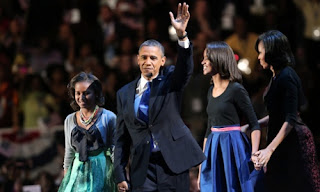
In the hours after his victory speech, many both domestically and internationally are making huge sighs of relief to see the 44th President re-elected, despite a clear victory in the all-important Electoral College.

Yet, for a long time, many Democrats feared the worse. Many influential commentators believed that Obama was on the verge of becoming the first Democratic President to serve one-term since Jimmy Carter. Perhaps he should’ve been.


Obama has already highlighted his desire to finish what he originally set out to do. It is true this is made easier by the fact that he no longer needs to be concerned about his re-election prospects and can ‘get on’ with the so-called job. However, for many ordinary Americans, the idea of getting the job done may appear vacuous and non-evident. For all the rhetoric Obama promised in 2008, much of his ideals and promises lie dormant. The audacity of hope became the absence of anything.

The economic legacy inherited by the Obama administration was far from healthy. Increasing unemployment, a chaotic financial system as well as dealing with two long-term wars and an ever increasing public debt. For any President arriving into White House, any sort of political legacy would need to be put to one-side whilst dealing with the bigger issues. Yet Obama chose to deal with healthcare.

There are arguments to be had about healthcare in general in America. Whether you agreed with George W. Bush extending Medicare or the universal cover provided by Obamacare. But why was this his focus? Why did Obama fail to create the jobs he said he would create? Why was the stimulus seen as the only answer to solving America’s crisis?

Some complain that the Republican majority in the House of Representatives made things impossible, but other Presidents had managed to deal with this before (Clinton springs to mind).

No incumbent President had ever gone into the polls with such poor unemployment figures and approval ratings. So the question is how did the Republicans lose it?

The wrong message
There’s no doubt that Mitt Romney was the best out of a bad bunch, but it shouldn’t deflect from the point that he is a more than competent candidate to become President. A successful businessman, family man, and politician with an excellent record as Governor, Romney was a capable of winning.

Yet, perhaps the Republicans forget the most important thing about politics. Elections are about winning. For too long the candidates slung mud and created an unhealthy portrait of each other. Commentators point at the fact that this allowed Obama to spend his campaign money during the election, but money fundraising wasn’t an issue during the election for either side.

The problem was that we saw the Republicans for what they really were and it was a right-wing party that did not reflect the rest of the electorate. Politics is tribal, but surrendering the centre-ground can be ill-afforded in any election. The GOP may have targeted the blue collar and the religious vote, but its policy towards immigration, the economy and women saw it ostracise a huge proportion and increasingly important section of the electorate: Hispanics and women. Suicidal when one looks at the make-up of the swing states.

For now, the debate will quickly move on as Obama tries to deal with the impending issue of America’s fiscal cliff but the question for the Republicans really remains where do they go next? Was Romney a failure because he wasn’t conservative enough or was it that the party is too right-wing?

2016 will see two new candidates from each side fight again. Even if the Republicans decide to lead with a woman (not Palin) or even a Hispanic, what’s more important is that they sort out their politics, otherwise they won’t be elected any time soon.

Tuesday, 8 November 2011

Obama - a year to go.

When Barack Obama was inaugurated as America’s 44th President, he used the Bible of his political hero, Abraham Lincoln, to be sworn into office. Throughout his election campaign, Obama had highlighted his inspiration for America’s 16th President and particularly the work that he performed during the dark days of America’s Civil War, illustrated in the book ‘Team of Rivals’. As a bust of Winston Churchill had adorned the office during the Presidency of George W. Bush, Obama soon replaced it with one of Lincoln. Immortalised at Mount Rushmore and the grand Athenian-style memorial in Washington, Lincoln was famed for his ability to negotiate with sworn enemies and eventually reunite the Confederacy with the Union after four years of fighting. At the moment of victory, ‘Honest Abe’ was assassinated at Ford’s Theatre on Good Friday, and nearly 150 years later he is still revered by most, though not all, Americans. Obama, now  less than a year away from the 2012 Presidential elections  and with approval ratings hovering ominously low around the 45 per cent mark, America’s first black President will be hoping that he does not cede office after one term and can overcome hostilities like Lincoln fared during his tenure.

It was a moment that the whole world appeared to revel in. America, a country that for decades was torn apart by race relations had elected a black President (mixed-race to be specific). The First Lady’s Michelle Obama genealogy revealed that a remarkable five-generation journey from slavery to the White House.  Fifty years before him, America’s most famous black orator and civil rights campaigner, the Rev. Martin Luther King Jr. delivered his ‘I have a dream speech’ and yet the early part of his prose, which is often forgotten, speaks of how America reneged on its promise he said:

“Five score years ago, a great American, in whose symbolic shadow we stand today [Lincoln], signed the Emancipation Proclamation. This momentous decree came as a great beacon light of hope to millions of Negro slaves who had been seared in the flames of withering injustice. It came as a joyous daybreak to end the long night of their captivity.”

It appeared the world had now come full circle. Here was a man, in the shadow of Lincoln and King, completing the Trinity. Obama, the community campaigner from Southside Chicago had become President.

For most international observers, he was importantly not George W. Bush. He was much more circumspect with his words; he wasn’t as moralistic as his predecessor and he appeared to hit the right note when talking to his audience. Obama had written his own political verse ‘The Audacity of Hope’ in 2006, a manifesto of his own thoughts. It is true that many Americans appreciated the honesty of George W. Bush and his world view; however it was clear that his perspective was often blurred by American exceptionalism and the neo-conservative ideology, which is coarse by most standards but became toxic after eight years in office. Despite the whirlwind election campaign that firstly knocked out Hilary Clinton and then Republican candidate John McCain, Obama tried to play down his ambitions. He was not a lifesaver, but just had a different perspective. Here was someone who had opposed the Iraq War that had bogged down American foreign policy, he was not an establishment figure.

There have been some high points during his Presidency, the extension of Medicare to poorer citizens, the killing of Osama bin Laden and the general bonhomie has returned towards America from abroad. Yet as this blog has mentioned before, Obama has been prostrated by the global economy and a militant Republican Party/Tea Party. So a year away, what chance does Obama have to a second term in office and does he deserve it.

As any public relations or electioneer expert will tell you, the secret to success is to keep expectations low and then to exceed beyond those boundaries. Obama, who was reluctant to accept the ‘Yes We Can’ slogan during his campaign has found it difficult to make the transition of some of his promises and in turn as received a great deal of criticism. He has been unable to close Guantanamo Bay, Afghanistan and Pakistan have became major  foreign policy headaches, the operation to clean up the oil spill in the Gulf of Mexico directed criticism at him and the stimulus packages have caused great rancour from across the country. Some states such as Wisconsin and New Jersey have almost come to a standstill as the fiscal crisis puts increasing strains on the American economy and the public sector. Unemployment remains high around nine per cent, the credit ratings agency Moody’s downgraded US debt and the economy continues to stagnate.

Critics have labelled him a ‘do-nothing President’, the man who is known to think before he speaks is seen and labelled as weak. Not to mention rumours that he wasn’t even born in the US. The midterm elections that saw him lose control of the Senate and encounter an extremely right-wing Republican Party has done him no favours either. The brinkmanship nearly the pushed the country into default as the two sides could not agree an amendment on the debt ceiling in August. Although he has been able utilise their robustness as a tool of politics, it seems unlikely that Obama will be unlikely to use the economy as the platform to be re-elected. Certainly, the measures put forward by Republican candidates are hardly enviable (more tax cuts to the rich) but as Apple guru Steve Jobs said to the Obama he was heading for a one-term Presidency if he did not sort out his growth and business policies.

It seems most likely that his election strategy may be built on the better than the alternative idea. Although Mitt Romney appears to be the candidate that most deem to be Presidential, he is mistrusted by much of the Republican faithful. The alternatives of Herman Cain or Rick Perry could be possibilities. If he is unable to surmount past the 50% approval ratings then we are likely to hear musings of squeeze the middle and favour the wealthy, it will be about economic inequality. Though whichever candidate he faces will determine what line he plays. The last thing he wants to do is ostracise both blue and white-collar white voters, a place where he built his victory on in 2008.

Obama has overseen a different type of America and is trying to reduce its footprint on the international scene. He was most notably quiet during the Arab Spring and reticent during the NATO campaign in Libya. Although he has managed to use his stardom in the international arena, he doesn’t necessarily flaunt it. He has been happy to allow Secretary of State Clinton to be take stage internationally and isn’t as convivial abroad as predecessors like JFK or George W.Bush . Americans are used to their politicians being able to feel their pain and yet be the Commander in Chief and ebullient statesman, something Clinton and Reagan managed with ease, yet Obama doesn’t conform to nor want to. It appears that the many of the qualities that Obama came to office with have become his handicap. With 37% of American voters declared to be independents and 14 million currently unemployed, Obama may need to dig into the stardust that brought him to power if he wants a second term.

Thursday, 9 June 2011

It's the economy, dumbass!

The political change taking place across the Middle East and North Africa has surprised most commentators and politicians in terms of its success and speed. Many of the countries that have changed during the ‘Arab Spring’ had been controlled by strongmen who had been in charge for decades. Hosni Mubarak, who stood down from Egypt after thirty years, was only the third president since the 1952 revolution. What has interested me most besides the timing, has been the reaction of the world’s major countries, particularly America. The US has been a major player in the region in the past sixty years, providing aid (and arming) Israel, placing sanctions on Iran and removing Saddam Hussein from power in Iraq. The US has a varying record across the world but it is always unanimous when it comes to promoting and pushing values of democracy and liberty.

These values are mentioned dozens of times in any presidential speech and evolve ultimately from America’s Declaration of Independence and Bill of Rights. American troops are deployed all around the world to protect the love of their country and the values it evokes. Yet despite the vivid portrayals of flags and parades adjoined to the rhetoric from the likes of Sarah Palin and Michelle Bachmann, I wonder whether America is perhaps over-democratised and whether its ‘brand’ of politics is tarnishing the way the system works?

To many, 20 January 2009 was a historical day across the world, but particularly in America. Barack Obama was sworn in as the first black US President. It was a magical moment to watch and the banners for change were painted across cities and small towns in America through the ubiquitous ‘Hope’ posters that will come to define a generation. Yet since that day the obvious stalling of the American economy has defined Obama’s first term as President and with that an infectious antagonism has developed between the President’s Democrats and the Grand Old Party (GOP), the Republicans.

The passage of Obama’s healthcare bill that in essence extended insurance provision to the poorest in society caused fractions between both parties. Obama’s Presidential opponent, Senator John McCain called the bill ‘unconstitutional’ and the President was called a liar by Republican Joe Wilson during a joint session of Congress, a major disrespect in American conventions and in most democracies. The issues of late has been the nation’s high unemployment rate, around 9%, and the inability to agree on America’s deficit (currently America’s total debt stands at $14 trillion (and increasing)). The Democrats, who suffered defeats during the midterms, struggled to pass through the President’s budget until the last minute. Yet, the belligerent GOP who block every bill proposed by Mr Obama, have struggled to formulate their own deficit reduction plan. Congressman Paul Ryan who put forward a much tougher plan, compared to the Democrats, called the ‘Path to Prosperity’ wanted tighter reforms to healthcare and federal spending. This too was voted down. Politicians are embattled over the Treasury’s ceiling limit of American federal debt and the unrest is visible as states such as New Jersey, California and New York struggle to tackle their public spending, even the NFL nearly went on strike. Yet amongst all this, it appears we are yet again in election season.

Despite the US elections being over 18 months away, we have already descended into the hubbub of caucuses and campaigning. The Republicans candidates are still deciding whether 2014 is the best opportunity for them to run. Most headlines nationally and internationally focus on the glamorous, relentless yet fallible Sarah Palin. An ambassador of the Tea Party and a saviour to America’s right, Palin has taken herself on a tour of the US but has yet to confirm whether she will stand. The flamboyant property tycoon Donald Trump also ruled himself out after questioning Obama’s citizenship. Another unhealthy idea evolving from America’s Right is the re-emergence of Reagonomics, in honour of the Republican’s ideological God – Ronald Reagan. Yet Reagan’s policy of cutting taxes yet maintaining a large military capability through borrowing seems idiotic but plays with the patriots’ hearts, despite a horrendous deficit. There appears to be plenty of choice of candidates but no one outstanding.

American electioneering has revolutionised the way democracy and politics works and moves. From the advent of Presidential debates that saw the rookie John F, Kennedy defeat the experienced Richard Nixon to the sophisticated internet campaign that saw Obama steamroll Hilary Clinton as nominee then John McCain. Presidential campaigning is a billion dollar industry and has been used over the years to the Philippines, Venezuela, even the Scottish National Party (SNP) adopted the technology in the recent local elections in the UK.

Now here is the problem, expect utterances of ‘American exceptionalism’ and the usual musings of freedom, hope etc. Yet, it appears to deflect from the big elephant in the room. Bill Clinton’s infamous election phrase, ‘It’s the economy stupid!’ America is in a safer position compared to Britain because the dollar is the world’s reserve currency and developing nations are still prepared to buy US Treasury bonds. Yet the dynamics of American electioneering deflect from the intrinsic importance of policy making and sorting out the economy. The current UK coalition between the Conservatives and the Liberal Democrats could of course collapse at any time, coalitions do, but the five year plan to wipe out the deficit, despite its critics, is backed and understood by most members of the British public. The British economy is of course entirely different to the American, but the flexibility of the Parliamentary system, which does have its flaws, has shown that the benefits over a codified and rigorous constitutional system. America’s love of democracy isn’t helping any recovery.

America should be proud of its values and persistence to promote and enhance the lives of others across the world. Its labour markets are flexible enough to create new jobs and adapt to the global economy, yet it the constant dogmatism and disorder, perhaps over-democratisation, mixed with the professional electioneers, has caused it to stall and lose focus on important matters. By no means, would any American lust for the Chinese political system or the over bureaucratic system of India but it would aspire for year on year high economic growth and end site to potential financial meltdown. The world could not afford the American economy to default, but you wish someone would stop talking about flags and just say ‘it’s the economy stupid!’
Share

Widgets